



CBG and CBN sit at opposite ends of the cannabis plant’s life story: CBG is the first cannabinoid the plant produces, the precursor every other major cannabinoid is built from, while CBN is among the last to appear, forming only as THC ages and breaks down. CBG is non-intoxicating and associated with daytime-oriented products; CBN is mildly psychoactive and lives almost entirely in nighttime blends. Same plant, different chapters, different uses. Here is the full comparison.
Key Takeaways
- CBG (cannabigerol) is the “mother cannabinoid”: the plant makes it first, then converts it into THC, CBD, and the rest.
- CBN (cannabinol) is the end of the line: it forms as THC oxidizes with age, heat, and light.
- CBG is non-intoxicating; CBN is mildly psychoactive, though far weaker than THC.
- In products, CBG leans daytime and CBN leans evening, a market convention running ahead of the science on both.
- Both appear on a proper COA by the milligram, which is how you verify either one is actually in the product.
What is CBG?
Cannabigerol, CBG, is the chemical starting point of nearly everything interesting the cannabis plant does. The plant first produces CBGA, cannabigerolic acid, and then enzymes convert that one precursor into the acidic forms of THC, CBD, and CBC as the plant matures. By harvest, most CBGA has already been spent on those conversions, which is why ordinary flower tests at only a fraction of a percent CBG, and why it earned the nickname “the mother cannabinoid.” Getting commercial quantities means either harvesting unusually early or growing cultivars bred specifically to hoard their CBGA instead of converting it, both of which cost more than growing ordinary hemp. CBG is non-intoxicating, like CBD, and the research on it is young: mostly preclinical work, long on possibility and short on finished human evidence. Any page telling you confidently what CBG treats is ahead of the data, and we would rather be behind the hype than ahead of the proof.
What is CBN?
Cannabinol, CBN, comes from the opposite end of the timeline. The plant barely produces it directly; instead CBN forms as THC degrades through exposure to oxygen, heat, and light. Old flower is naturally high in CBN the way old apples are naturally brown, which is why on a flower COA the CBN line reads as a freshness indicator. In finished products the story flips: commercial CBN is deliberately produced from hemp, purified into isolate, and dosed by the milligram, most often into evening-oriented gummies alongside CBD. It is mildly psychoactive, far below THC, with most users reporting little to no high at product doses. We covered the compound in full, including what the thin research record does and does not support, in what does CBN do.
CBG vs CBN, side by side
| CBG | CBN | |
|---|---|---|
| Origin | First cannabinoid the plant makes; precursor to THC and CBD | Forms as THC ages and oxidizes |
| Intoxicating? | No | Mildly; far weaker than THC |
| Where you find it | Tinctures, gummies, some daytime blends | Evening blends, usually with CBD |
| Why it costs more | Early harvest or specialty cultivars | Deliberate conversion and purification |
| Research status | Early, mostly preclinical | Early, small studies, mixed results |
The day-and-night marketing convention (and what it is actually based on)
Walk any hemp shelf and the pattern is instant: CBG products wear sunrise branding and CBN products wear moons and stars. It is worth being honest about where that convention comes from. Partly it is user report, aggregated informally across years of products: people tend to describe CBG blends as clear-headed and CBN blends as wind-down. Partly it is a single famous rat study here and a 1970s five-person study there, stretched thin across an industry’s worth of labels. The convention is not meaningless, conventions this stable usually track something real in aggregate experience, but it is a convention, not a clinical result. Our rule is to describe products by what is verifiably in them and let you decide what fits your routine: the milligrams are facts, the moons are marketing.
Can you take CBG and CBN together?
They are not opposites and nothing about them conflicts; they are different molecules binding different targets, and plenty of full and broad spectrum products naturally carry small amounts of both alongside CBD. Deliberate blends exist too, usually anchored by CBD with CBG or CBN as the featured minor. The practical questions are the same as for any cannabinoid product: what exact milligrams of what exact compounds, verified where? That answer never comes from the front of the package. It comes from the batch COA, where every cannabinoid in the product is listed by concentration, which is the single habit that makes you immune to minor-cannabinoid marketing from any brand, ours included. Our guide to reading third-party lab tests shows exactly where the CBG and CBN lines sit on a report.
Why both cost more than CBD per milligram
CBD is cheap because the plant is generous with it: high-CBD hemp is abundant, and extraction is routine. Both minors fight that economics from different directions. CBG supply means either harvesting weeks early, sacrificing the rest of the crop’s development to catch the CBGA before the plant spends it, or paying premium prices for the handful of cultivars bred to hoard it; either way, a milligram of CBG costs multiples of a milligram of CBD at the raw-material stage. CBN supply means running a deliberate conversion and purification process on cannabinoids that were already extracted once, a manufacturing step stacked on top of normal extraction. That cost structure is worth knowing as a buyer, because it sets a floor: a product advertising big CBG or CBN numbers at a bargain price is making a math claim the COA needs to confirm before you believe it.
The entourage question
Both cannabinoids also show up without top billing. Full spectrum extracts naturally carry small amounts of CBG and CBN alongside CBD and trace THC, and broad spectrum keeps the minors while removing the THC, which is part of why those extract types are described as fuller experiences than isolate. The theory that cannabinoids and terpenes work differently together than apart, usually called the entourage effect, remains a hypothesis with suggestive rather than settled evidence, and we treat it accordingly: a reason to prefer whole-plant extracts and keep terpenes intact, not a promise of specific outcomes. Practically, it means you may already be getting low doses of both compounds in any full or broad spectrum product you use, and the COA’s cannabinoid table will tell you exactly how much.
Which one is right for your routine?
Strip the mystique and the choice is simple. If you want a non-intoxicating cannabinoid for daytime use, CBG fits that slot the same way CBD does, and the two are often paired. If you are building an evening routine and want the cannabinoid most associated with it, CBN is the one the category has organized itself around, and it is mildly psychoactive, which some people want at night and others do not. If you are new to both, the boring advice is correct: start with one, at a known dose, from a product with a published COA, and let your own experience outvote every blog post on the internet, including this one. Experience is the only study with a sample size of exactly you.
Where to start with CBN
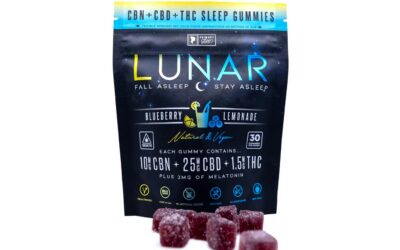
Our CBN offering is the LUNAR CBD + CBN gummy: a fixed per-gummy dose of CBD and CBN together, lab tested batch by batch, with the full panel published on the Lab Results page. If you are weighing CBN against the cannabinoid you already know, the companion piece is CBD vs CBN, and the deep dive on the nighttime question specifically is do CBN gummies help sleep, written with the same no-overpromising rule as this page.

FAQ
Is CBG or CBN better for sleep?
Neither has strong clinical evidence, and we do not make sleep claims. CBN is the cannabinoid the nighttime category is built around and is mildly psychoactive; CBG is non-intoxicating and conventionally positioned for daytime. Your own experience at a known dose is the real answer.
Does CBG get you high?
No. CBG is non-intoxicating, like CBD. CBN is the one of the pair with mild psychoactivity, and even that is far below THC at typical product doses.
Why is CBG called the mother cannabinoid?
Because the plant makes CBGA first and then converts it into the precursors of THC, CBD, and CBC. Every major cannabinoid in the plant started as CBG’s acidic form, which also explains why so little remains by harvest.
Can CBG or CBN cause a failed drug test?
Neither is what standard panels screen for, but products containing them can also contain trace THC unless they are verified THC-free on the batch COA. If testing matters to you, the COA and our drug testing guides are the places to look before buying.
Are CBG and CBN legal?
Both are sold under the federal hemp framework today when derived from compliant hemp, and state rules vary the same way they do for all hemp products. Check your state and check the COA; the product should make both easy.
0 Comments